
Shelter Field Trips
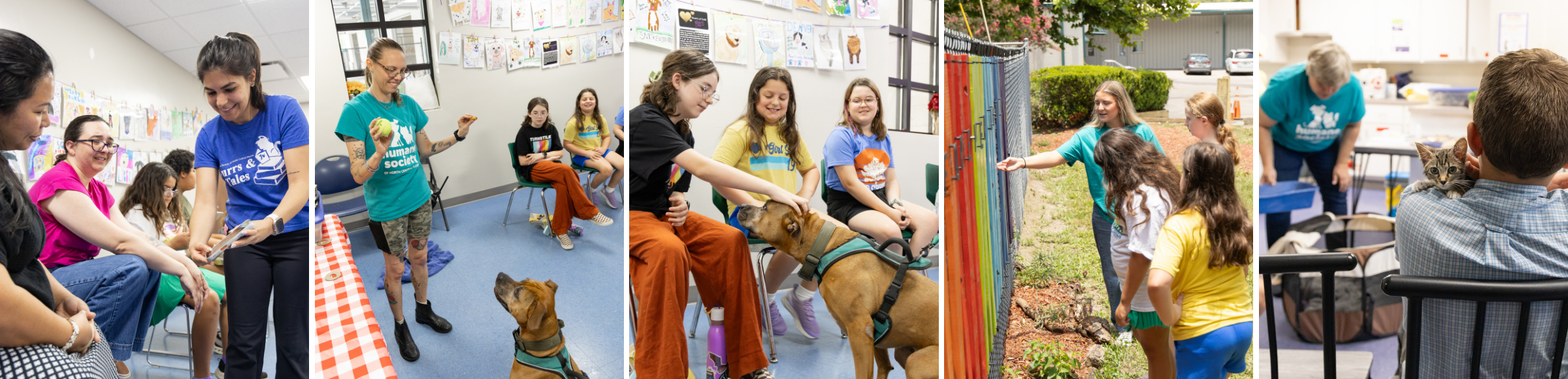
Bring your students to the Humane Society of North Central Florida for an interactive, educational field trip that introduces them to animal sheltering, responsible pet ownership, and compassion for animals.
During this 90-minute visit, students will rotate through hands-on learning stations, meet shelter staff and volunteers, and gain a behind-the-scenes look at how our community helps animals in need.
Program Details
Duration: 1.5 hours
Available Days: Monday through Saturday
Available Times: Between 1:00 PM and 3:30 PM (Morning availability upon request)
Cost: $10 per child
Chaperons: 3 adults, additional chaperons $10/each
Deposit: $50 nonrefundable deposit due at booking
Group Size: Minimum 5 students, maximum 25 students
Scholarships: Limited scholarships are available for Title I schools.
Cancellation & Booking Policy
- A $50 nonrefundable deposit is required to reserve your field trip date.
- Final attendance numbers should be provided prior to the visit.
- If severe weather or an emergency requires cancellation by the shelter, groups will have the option to reschedule.
- Please arrive 10–15 minutes before your scheduled start time to allow for check-in and group organization.
Learning Objectives
Students will:
-
- Learn about responsible pet ownership and animal welfare.
- Understand the role of animal shelters in the community.
- Explore careers in animal care and nonprofit organizations.
- Develop empathy, compassion, and respect for animals.
- Discover how volunteers, fosters, donors, and community members help save lives.
Important Information & Expectations
- Recommended group size for activities is 4–5 students per small group to encourage participation and hands-on learning.
- At least one chaperone is required for every 8–10 students. Teachers and chaperones are expected to remain with their groups throughout the visit.
- This is a working animal shelter. Adopters, visitors, staff, volunteers, dogs, cats, and other shelter activities may be present during program hours.
- Animal availability varies daily. While we strive to provide animal interactions whenever possible, specific animals or activities cannot be guaranteed.
- Program stations and activities may be modified based on group age, group size, weather conditions, shelter operations, and animal welfare considerations.
- Students must remain with their assigned group and follow directions from shelter staff, volunteers, and teachers at all times.
- Please use quiet voices and calm movements around animals. Loud noises and running can cause stress for shelter pets.
- Animals may only be touched or handled when invited to do so by a shelter staff member or volunteer.
- For the safety of our animals, please do not bring outside pets to the shelter.
- Closed-toe shoes are strongly recommended for all participants.
- Some areas of the shelter may have strong odors, barking dogs, or animals receiving medical or behavioral care.
- Photos are welcome unless otherwise directed by staff.
- The Humane Society reserves the right to adjust the program schedule or animal interactions to prioritize animal welfare and participant safety.
Please fill out the form above to request a program. An education team member will be in touch shortly to assist you with scheduling.
For questions please contact our Outreach Team at Outreach@humanesocietyncfl.org or call 352-373-5855 ext. 722
What Students May Experience
Stations and activities may be adapted based on student age, group size, weather, and animal availability.
Shelter Tour
Students get a behind-the-scenes look at a working animal shelter. They may see different animals, meet staff and volunteers, and learn how each role supports daily shelter operations. This station also introduces topics such as fostering, volunteering, animal care, and how community support helps fund the shelter’s work.
Fostering
Students learn how foster homes help animals who need extra care, time, or space outside the shelter. Through a pretend foster approval activity, students may complete a sample foster application, gather supplies, and discuss what animals need to thrive in a temporary home.
Dog Talk
Students learn the basics of dog body language, safe interactions, and responsible dog ownership. When appropriate, this station may include a demonstration with a calm, well-socialized dog, including safe greetings and simple training cues such as sit or shake.
Kitten and Cat Care
Students learn about basic cat and kitten care, including seasonal topics such as bottle babies and what to do if they find kittens outdoors. When appropriate, students may create simple cat enrichment toys to support shelter cats.
Enrichment for Shelter Animals
Students discover how toys, treats, puzzles, and creative activities help keep shelter animals healthy and engaged. Hands-on activities may include making dog treat toys or designing recycled cat enrichment items.
Fundraising and Community Support
Students learn what it takes to operate a shelter and how donations, fundraising, and community involvement make animal care possible. Activities may include a scavenger hunt, poster activity, or designing a simple fundraiser or donation drive.
Medical Care
Students are introduced to basic animal health and intake procedures. Topics may include nail care, ear and eye checks, identifying injuries, and the importance of routine observation at home. Demonstrations may use a model or calm animal when appropriate.
Help Support Programs Like This
Donations allow us to offer scholarships and help support community-focused programs, humane education, and enrichment opportunities for shelter animals.
Interested in Sponsoring an Education Initiative?
Would you or your company like to sponsor one of our education initiatives? Please contact outreach@humanesocietyncfl.org to learn more about sponsorship opportunities and ways to support community programs like Purrs & Tales.
Proudly Supported by